From Restraint to Connection: The Complete Guide to Pet Leashes
A leash, a seemingly simple piece of equipment, is the lifeline for your pet’s safe outdoor adventures and the physical bond of trust and understanding between you and your furry companion. Choosing the right leash is far more than just something to “hold them”—it’s about comfort, safety, training, and communication. This article will provide an in-depth exploration into the world of leashes.
I. Core Functions: Beyond Just “Holding”
- Safety Assurance: This is the most fundamental and vital function. It prevents pets from getting lost, darting into traffic, ingesting harmful substances, or getting into conflicts with other animals.
- Behavior Management: An essential tool for training, it allows for gentle guidance to teach pets good manners like loose-leash walking and waiting, enabling civilized outings.
- Emotional Communication: Through the subtle tension transmitted by the leash, you and your pet engage in a silent dialogue. A slack leash signals relaxation and trust, while tension may indicate nervousness or curiosity.
- Law & Etiquette: In most public spaces, using a leash is a legal requirement and a sign of respect for others (especially those who may be fearful, or children) and the surrounding environment.
II. Main Types &Usage Scenarios
Understanding the different types of leashes is the first step to making the right choice.
- Standard Fixed-Length Leash
- Features: Fixed length (commonly 1.2m – 1.8m), simple and sturdy construction.
- Advantages: Offers the greatest control, facilitating command communication and handling emergencies.
- Best For: Daily walks, training phases, crowded urban environments, large dogs, or highly excitable dogs.
- Retractable Leash
- Features: The cord/tape freely retracts and extends (typically 3m – 8m+), equipped with a locking mechanism.
- Advantages: Grants pets more freedom to explore within a safe radius, satisfying their need to sniff.
- Important Note: Requires practice to use the lock proficiently; can make quick control difficult in emergencies. Not suitable for untrained dogs or use in complex environments.
- Training Slip Leash (or “P-Style” Leash)
- Features: Forms a loop that goes over the pet’s head, providing gentle pressure for cues and corrections.
- Advantages: When used correctly under professional guidance, it is an efficient training tool for quick communication.
- Crucial Reminder: Must be used correctly; improper use can cause injury. Recommended to learn its use under the guidance of a professional trainer.
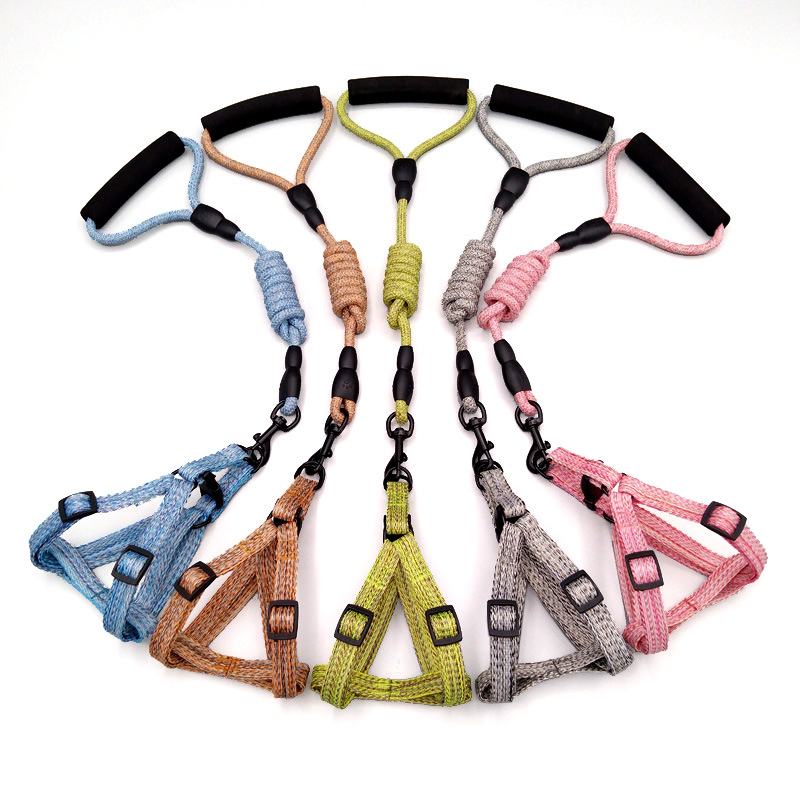
- Harness-Compatible Leash
- Features: The attachment point is on the back, designed to be used with a Y-shaped or H-shaped harness.
- Advantages: Distributes pressure, avoiding neck injury. Particularly suitable for dogs that pull, have neck sensitivity, or respiratory issues.
- Best For: Nearly all dogs, especially recommended for small to medium-sized dogs and general daily walks.
III. Key Purchasing Factors: Prioritizing Safety & Comfort
- Size & Strength: Choose based on your pet’s size and power. The clasp, webbing, and connection points should all be sturdy and durable. Larger dogs require wider, higher-weight-rated options.
- Handle & Grip: The handle should be comfortable, non-slip, and shock-absorbing. It shouldn’t cause fatigue during long walks and should provide a secure grip in emergencies.
- Clasp & Lock: The clasp should operate smoothly yet securely. The lock mechanism (especially on retractables) should be easy and reliable to operate.
- Reflectivity & Visibility: Leashes with reflective stitching or materials significantly enhance the safety of both you and your pet during night walks or in low-light conditions.
- Material: Common options include Nylon (durable, many color choices), Leather (classic, durable but requires maintenance), and synthetic fiber (lightweight, easy to clean). Choose based on your climate and usage habits.
IV. Safety & Etiquette Tips
- Regular Inspection: Before each use, check the leash for any wear, fraying, and ensure the clasp functions properly.
- Proper Fit: A harness or collar should be snug but allow you to fit two fingers underneath—too loose risks escape, too tight causes discomfort.
- Avoid Entanglement: Always be mindful not to let the leash tangle around your limbs or your pet’s, especially with retractable leashes.
- Respect Others: In areas with high foot traffic, children, or when approaching other pets, proactively shorten the leash to maintain a safe distance.
- The “Length of Care”: Remember, the length of the leash defines the radius of your pet’s world to explore and measures the depth of your responsibility as an owner.
A good leash is a gentle extension of your arm. It should not be a harsh restraint, but a flexible zone of safety and a channel for默契 communication. May every outing with your beloved pet be more confident, joyful, and peaceful because of this thoughtful choice.